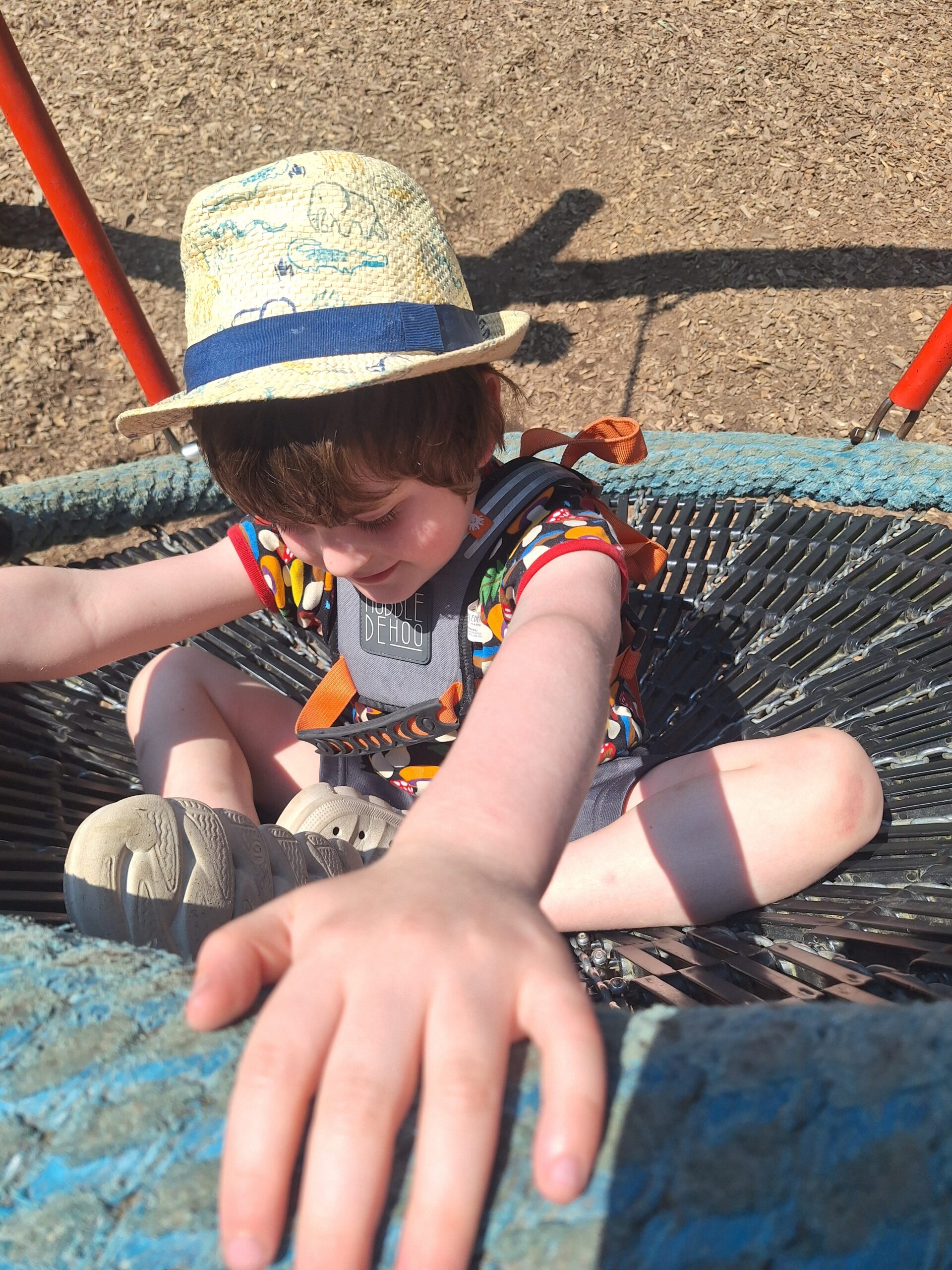
Otis was our June warrior back in 2023, when he was two – this is an update on his progress.
Without rehashing large quantities of information (feel free to go back and read his previous post https://ukinfantilespasmstrust.org/our-june-warrior-otis/ first):
• Otis was diagnosed with infantile spasms at 5 months and standard treatment didn’t initially work, higher doses corrected this
• He came off treatment a few days before his first birthday but had significant Global Developmental Delay (especially around speech, language and communication) and was struggling to wean onto solid foods.
• The gap between him and his peers had closed significantly for physical development, but remained for many other areas (most specifically for speech and language development, he was considered pre verbal/non verbal)
• It was suspected that an Autism diagnosis was on the cards (this has now been assessed and diagnosed).
Since then, we have been active in ensuring he has the best possible support in place; knowing about his delays and knowing the SEND system from experience with our older children we decided sensory, social and emotional development needed to be prioritised above and beyond academic progression (which can always be added to retrospectively), so we pushed for an Educational Psychology assessment and an EHCP (Education, Health and Care Plan) before he even started pre school. This concluded that a specialist setting would be most appropriate for him and as such he is just (at the time of writing) in the final days of his reception year.
His speech and language has changed enormously, and he’s now considered to be mostly verbal; his expressive language is still developing and some of his limitations are related to his limited capacity to understand what is going on inside his body. Anxiety and sensory overwhelm can impact his ability to communicate, or access language. His school use a combination of reading his body language alongside verbal and sign language and communication boards to ensure communication is always possible in some form.
He has made some really good friendships, they may look a little different than those witnessed in mainstream, but it’s very clear he has friends and misses them dearly during the holidays, or when he has to take other time off from school. When he sees them in the morning, he really lights up and gets very happy to be there. He has little habits and routines he plays out with different members of staff and makes quite the impression on people.
This is despite the fact that his first year hasn’t been without struggle; he gets massive sensory overwhelm and struggles with the full day and coming out of school with everyone else, this has led to some hefty meltdowns so he finishes his day a little earlier than his peers.
Additionally this academic year has also brought about some new diagnoses too; though we were hoping he’d avoid it, a new form of epilepsy has developed (with multiple seizure types) and whilst we are still working with specialists to fully understand this new form of epilepsy he is stable on medication and has minimal side effects from the medications. He also has been diagnosed with something known as Autonomic Dysfunction, particularly around regulating body temperature. For him this means in humid or hot environments, his body can lose the ability to regulate temperature and/or sweat and he can go into heat exhaustion and decline into heat stroke symptoms very quickly and rapidly deteriorate. So we have to have an action plan together to avoid him getting to the stage of floppy lethargy that may require hospitalisation; this summer of heatwaves has certainly been interesting so far.
I think it’s easy for people on the outside looking in to recognise that it’s stressful and complex, and worlds away from “normal”. However, when I think of the definition of a young boy or reception aged child I think of energy, imagination, volume (often to an annoying extent), questions, curiosity and exploration, arts and crafts (play dough and glitter), mess galore, fun and character. We have all of these in abundance. He still loves Hey Bear, he still loves water and messy play. Now he can be verbal about what he loves and has very real obsessions; Numberblocks is very central and he’s learned to count and do basic sums through this. He also loves cooking and baking and can memorise recipes “two medium eggs” is a very commonly heard phrase in our kitchen. He loves to clean up after himself too.
I guess my message is, yes the future feels scary with an infantile spasms diagnosis at 5 months old; learning about the diagnosis and reading about how the hypsarrhythmia can cause brain damage that needs timely treatment can be a real emotional catalyst to start panicking about what the future may be like. And yes, when you find an underlying cause for it, such as genetics in our case, that can make the future feel so uncertain. And then, a bit further down the line, when you look at a picture of your child’s needs and think maybe specialist education is necessary, it can feel to some like that’s giving less for the future. But I’ve found it’s better to look at each stage as it comes rather than trying to fathom the whole picture. There are so many variables, unpredictable and ever changing. Two years ago I couldn’t imagine him being verbal, or following anyone’s direction, or even recognising he’d done anything in his nappy let alone being (for the most part) potty trained. Now he’s not only verbal but reciting stories and counting and his life is so full. A diagnosis is an obstacle, but not a barrier. A specialist education is complementing his development and opening doors, not closing them and despite the challenges (health, behavioural or otherwise) he is his own, amazing and inspiring little character who lights up the room he’s in. He makes us all smile daily.
He’s amazing!