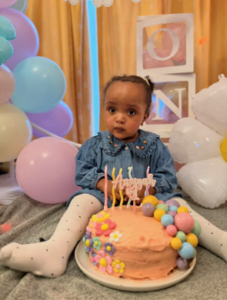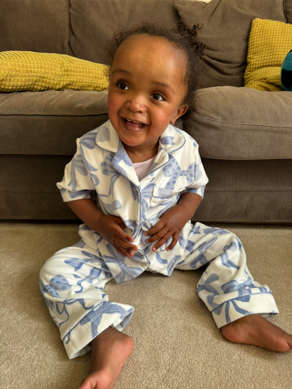
Our June warrior’s story is written by her mum Tahirah
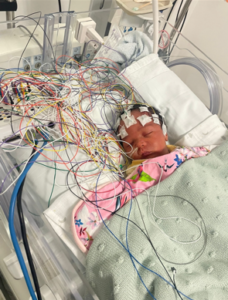
Aasiyah was born full-term in hospital. I had a healthy pregnancy and was planning a home birth, but due to meconium in my waters, we had to go into hospital. When Aasiyah was born, she was very floppy and we spent six weeks in NICU. After numerous tests and MRI scans, a full genetic test was carried out, and at 4 months old she was diagnosed with Sotos syndrome.
Aasiyah faced many challenges early on. In July, she had a sleep study and was admitted to hospital for 2 weeks while starting CPAP. While we were there, I noticed some unusual movements. I mentioned them to a nurse, who thought they were caused by tummy pain and gave her Calpol. Later that day, I showed the consultant a video I had managed to record and explained that I was worried the movements could be infantile spasms. I was told to stay away from “Dr Google.”
We were discharged that day, but I knew something wasn’t right. The following day, a Saturday, my husband took her to A&E. The doctors there agreed that the movements looked like infantile spasms but said an EEG was needed to confirm it. Thankfully, the EEG was arranged for Monday. I was so grateful for how quickly it happened because just an hour after the test, the consultant confirmed what I had feared all along — Aasiyah was having infantile spasms.
Her spasms were very obvious, and with each one she would scream. I dreaded them. Whenever they happened, I would call for my husband because I hated watching my baby go through it while feeling completely helpless. I was constantly worried about the damage each seizure might be causing.
Aasiyah was admitted to hospital to start Vigabatrin and was monitored for 48 hours. The spasms initially stopped, but they returned just two days after starting the medication. She was then prescribed Prednisolone, which thankfully brought the spasms under control.
She remained seizure-free throughout August, which was an incredible relief. However, the side effects of Vigabatrin were very difficult. My smiley, happy little girl completely stopped smiling, and it broke my heart.
Two months after starting treatment, Aasiyah had another EEG which showed significant epileptic activity, despite her not having any visible seizures.
It has now been 10 months since Aasiyah was diagnosed with infantile spasms. Although she is no longer having spasms, her consultant, my husband and I all feel that a long-term anti-epilepsy medication is the best option for her. We attempted to reduce her medication, but she quickly began showing some unusual movements again. She is now on Keppra and weaning off vigabatrin.
These past months have been some of the hardest of our lives, but despite everything, Aasiyah continues to make fantastic progress. Aasiyah has been receiving various therapies since she was three months old. Conductive education has been our favourite and, in my opinion, has made a huge difference to her development. She learned to sit independently at 11 months old, and in May she started crawling. That same month, we were finally able to remove her NG tube, which she had relied on since birth.
One of the loveliest things has been watching her personality emerge and seeing her develop her own interests. We love following her lead, which usually means spending time outside playing in the garden.
To anyone at the beginning of their infantile spasms journey, trust yourself. You know your baby better than anyone else. Don’t be afraid to ask questions, seek second opinions, and connect with other families who have been through it. It is an incredibly difficult journey, but you are not alone.
The support and resources provided by Infantile Spasms Trust have been invaluable to us. Their work makes such a difference to families navigating this diagnosis, and they continue to be a huge source of support for us.